
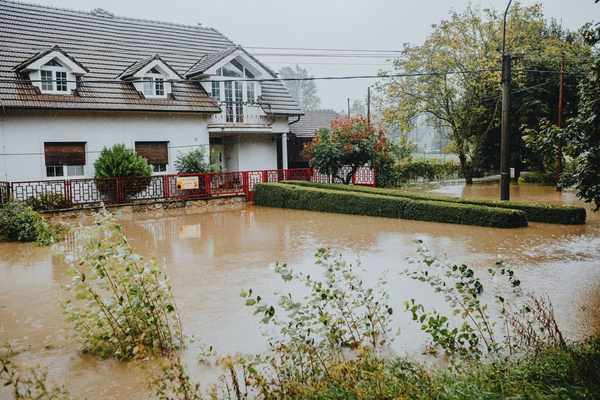
For homeowners in areas with a history of river, surface-water or coastal flooding, finding home insurance can feel more complicated than simply comparing price. The good news is that flood cover remains widely available in the UK, including for many homes considered higher risk. The key is understanding what a standard policy covers, how the Flood Re scheme works behind the scenes, and which details matter when comparing quotes.
For anyone searching for flood cover home insurance UK options, the postcode is only a starting point. Insurers may consider the property itself, local flood modelling, previous claims and the cover requested. A high-risk address can affect the premium or terms, but it does not automatically make a home uninsurable.
What flood cover usually means in home insurance
Flood damage is commonly included within UK buildings and contents insurance, although wording, limits and exclusions vary. Buildings insurance can cover the structure and permanent fixtures damaged by floodwater, while contents insurance can cover belongings such as furniture, appliances and personal possessions.
Check more than the headline statement that flood cover is included. The policy schedule may set out a specific flood excess, alternative accommodation limits and other conditions. If a property has flooded before, the insurer may also ask for more detailed information during the quote process.
How the Flood Re scheme helps higher-risk households
Flood Re is a joint government and insurance-industry reinsurance scheme designed to improve the availability and affordability of flood insurance for eligible homes. It began operating in 2016 and is planned to run until 2039. Consumers do not buy Flood Re directly. Instead, an insurer can pass the flood-risk portion of an eligible policy to Flood Re while continuing to deal with the customer normally.
This matters because flood risk property insurance can become expensive where modelling shows a significant chance of flooding. Flood Re gives participating insurers another way to manage that risk, which can help eligible households find more competitive cover.
Who may qualify for Flood Re?
Flood Re has specific eligibility rules. In broad terms, the property must be a private residential home in England, Wales, Scotland or Northern Ireland, usually be occupied by the policyholder or their immediate family, have an eligible domestic Council Tax band or equivalent, and have been built before 1 January 2009. The scheme is aimed at individual residential policies rather than ordinary commercial property or most privately rented homes.
Eligibility does not guarantee that every insurer will use Flood Re for a particular quote. The insurer decides whether to cede the flood element of the policy to the scheme, so shopping around remains worthwhile.
What a high flood risk postcode means for your quote
A high flood risk postcode UK search can be useful as an early warning, but insurers can assess risk more precisely than postcode level. Two houses on the same street may have different exposure because of ground level, distance from a watercourse, drainage, previous flooding or nearby defences.
Before comparing policies, check the official flood-risk information for the nation where the property is located and provide accurate answers about previous incidents. If the home has flooded, give the date, cause, depth where known, repairs completed and any resilience work added afterwards.
Related reading within a home-insurance site could naturally include storm damage and weather claims, understanding buildings insurance, and a home flood resilience checklist.
Compare the cover, not just the annual premium
A cheaper quote may not be better if the flood excess is much higher or the policy offers weaker alternative accommodation after a serious claim. Compare the buildings sum insured, contents limit, flood excess, temporary accommodation, exclusions, claims support and any special conditions attached to the address.
Mortgage borrowers should also remember that lenders generally expect suitable buildings insurance to remain in place. If ordinary comparison sites produce limited results, a broker or specialist insurer familiar with higher-risk properties may be able to search a wider market.
Flood defences and resilient repairs can reduce disruption
Property-level measures do not guarantee a lower premium, but they can reduce damage and make recovery easier. Depending on the building, measures may include flood doors, air-brick covers, non-return valves, raised electrical fittings, water-resistant finishes or flooring that is easier to clean and dry.
Flood Re also supports Build Back Better. Where an insurer offers it and the policy qualifies, a flood claim may include up to £10,000 above standard repair costs for measures that improve resistance or resilience to future flooding. The amount and conditions depend on the insurer, so check whether Build Back Better is included before buying.
This is why flood defence home insurance decisions should go beyond price alone. A policy that supports resilient repairs after a claim may offer practical value that is easy to miss during a premium-only comparison.
A practical example
Imagine a homeowner in a pre-2009 semi-detached house near a river who receives an expensive renewal after local flooding, even though their own home has not flooded. Rather than accepting it, they check the official flood map, gather evidence of nearby defence works, confirm there has been no previous claim at the address and obtain several quotes. One insurer may use Flood Re while another prices the risk conventionally. The homeowner can then compare premiums, excesses, alternative accommodation and resilience provisions.
The lesson is that “high risk” is not a simple yes-or-no label. Good information gives insurers a clearer picture and gives the homeowner a better basis for comparing cover.
FAQ
Is flood cover automatically included in UK home insurance?
Many buildings and contents policies include flood damage as a standard insured event, but terms differ. Check the policy wording, excess and exclusions rather than assuming every policy provides identical protection.
Can I apply to Flood Re myself?
No. Flood Re works through insurers. You buy home insurance normally, and the insurer decides whether to place the eligible flood-risk part of the policy with the scheme.
Does a high-risk postcode mean I cannot get home insurance?
No. A higher-risk location can affect price and terms, but many properties remain insurable. Flood Re may help eligible homes, while specialist insurers and brokers can also be useful where standard quotes are limited.
Will flood barriers reduce my premium?
Not necessarily. Some insurers may take resilience measures into account, but pricing models differ. Their main benefit is reducing the amount of water entering the property or limiting damage and recovery time if flooding occurs.
Keeping your home properly protected
Flood insurance is strongest when the homeowner understands both the risk and the policy. Check official flood information, disclose previous flooding accurately, compare excesses and claims support, and ask whether Flood Re or Build Back Better may apply. For higher-risk homes, those details can matter far more than choosing the lowest annual premium.